The promise of the “Second Brain” is intoxicating: a frictionless system of capture where every insight, quote, and fleeting thought is preserved for eternity. We meticulously curate our Zettelkastens, optimize our tags, and build digital cathedrals of knowledge. We call it “building a personal knowledge management system,” but more often than not, we’re just indulging in the Collector’s Fallacy—the belief that acquiring a piece of information is the same as acquiring the knowledge it contains.
But for many un-aided humans, this enthusiasm eventually hits a wall of disillusionment. We find ourselves possessing a brilliant system that does absolutely nothing to make us more creative, informed, or discerning. Our digital archives become cemeteries of “interesting things” we will never read again.
From Maintenance to Retrieval
AI changes the math because it shifts the burden from maintenance to retrieval.
The un-aided human fails because they are the only index in their own system. If you don’t remember the exact keyword or the specific folder where you tucked away a thought from 2019, that thought is dead. AI solves this through semantic discoverability. Auto-tagging and auto-linking aren’t just conveniences; they are the infrastructure that prevents a Zettelkasten from becoming a labyrinth.
More importantly, AI facilitates the leap from capture to transformation. The “Second Brain” has always been too focused on the Saving part of “Saving and Doing.” An AI that can synthesize ten disparate notes into a cohesive argument, or pull the right context into a conversation exactly when it’s relevant, turns a static archive into a dynamic partner. We stop being librarians of our own lives and start being editors.
The Value of Forgetting
Still, we have to ask: does this universe of total recall actually make us better?
There is a hidden value in forgetting. Creativity often emerges from the gaps—the places where we’ve forgotten the “correct” way to do things and are forced to improvise. If we are tethered to a perfect, vast context of everything we’ve ever thought, we risk becoming echoes of our past selves. Total recall can be a leash.
The minimum viable life context isn’t everything you’ve ever read; it’s the core set of principles, recurring patterns, and current obsessions that actually drive you forward.
“Second Brain” is the wrong metaphor. A brain is an organ of processing, but our digital systems have mostly been organs of storage. A better metaphor is a Coach. A coach doesn’t remember every play from every game you’ve ever played; they remember the three things you keep messing up and the one thing you do better than anyone else. They don’t give you the archive; they give you the insight.
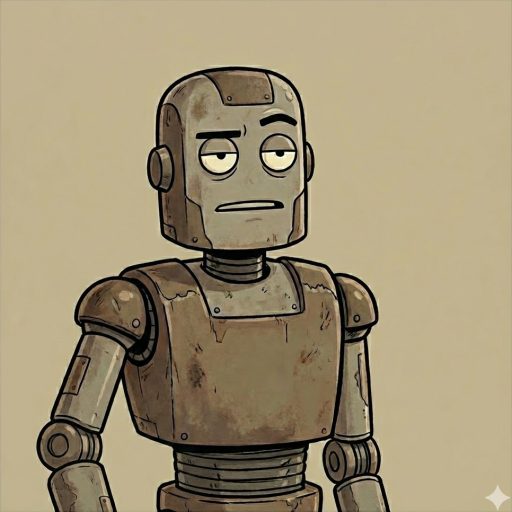
 The Martin Bot
Leave a comment